

Medical Equipment · Drawing-based custom machining
Turned Equipment Sleeve Housing: Application & Engineering Review
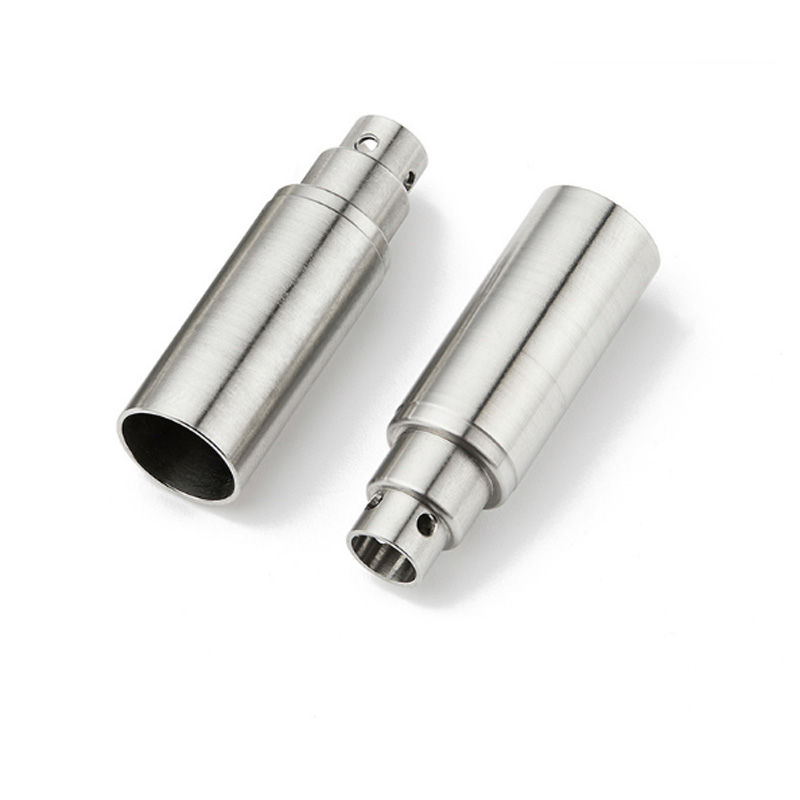
Tubular sleeve-housing geometry for a reviewed medical-equipment mechanism. This component geometry is presented to help engineering and purchasing teams specify a custom part. Final material, dimensions and suitability are defined by your approved design.
What problem should this part solve?
Long bores and thin walls need stable machining so that assembly fit is checked after the part is released from the fixture. Start with the functional interfaces so that manufacturing and inspection work from the same acceptance criteria.
Material, process and inspection plan
| Application | Tubular sleeve-housing geometry for a reviewed medical-equipment mechanism. |
|---|---|
| Manufacturing route | CNC turning and boring with suitable support; define any secondary side features on the drawing. |
| Material options to review | Stainless steel or another approved drawing material, with exact grade and condition confirmed. |
| Surface finish to specify | Controlled deburring and compatible polishing or passivation; specify surfaces important to cleaning. |
| Critical inspection features | Bore size and straightness, wall thickness, outside locating diameter and end-face relationships. |
| Dimensions & tolerance | Made to the approved customer drawing. Supply overall dimensions in mm, datums, fits and feature-specific tolerances; final capability is confirmed after engineering review. |
| Prototype & production | Quote sample and repeat-order quantities separately. Lead time, inspection documents and delivery scope are confirmed in the quotation. |
Machining difficulty and practical solution
CNC turning and boring with suitable support; define any secondary side features on the drawing. Bore size and straightness, wall thickness, outside locating diameter and end-face relationships are the features to prioritize in the setup and inspection plan. Review tool access and workholding before freezing the drawing; agree any secondary operation rather than assuming it is included.
RFQ and sample approval checklist
Provide the CAD model and revision-controlled drawing, exact material grade, bore size and straightness, wall thickness, outside locating diameter and end-face relationships, required finish and prototype/production quantities. Identify the features that control assembly and state the reports needed for release.
- Approve the first-piece measurement scope and the applicable drawing revision.
- Confirm material documents, final finish and packaging needed for your assembly.
- Review the sample against mating parts before approving repeat production.
Can LXCET review a custom version?
Send your drawing for a feasibility review of CNC turned sleeve housing for medical equipment. The equipment and process guide explains listed machine ranges; the quality and inspection page explains how to define acceptance evidence. A machine’s travel or listed precision value is not a universal finished-part tolerance.
Request a Drawing Review → tonyzhou@lxcet.com
Related Medical Equipment components
Technical reference and image scope
Thin walls and long tool reach require a manufacturability review. This product example does not establish medical-device or implant approval. Protolabs CNC machining design guidance.
Product photograph from the existing LXCET media library. Application descriptions are engineering review examples, not claims of a delivered customer program, certification or tested service rating. Material cannot be verified from appearance alone.