

Blog


CNC machining in China can give engineers and buyers access to a broad supplier base and coordinated manufacturing services. It can also add qualification work, transport time and communication risk. The right decision depends on the part, order volume and supplier’s demonstrated ability to meet your requirements.
This guide examines the advantages and disadvantages of sourcing machined parts from China, with practical controls for each risk. The recommendations are a sourcing framework, not a claim that every Chinese factory offers the same price, quality or lead time.
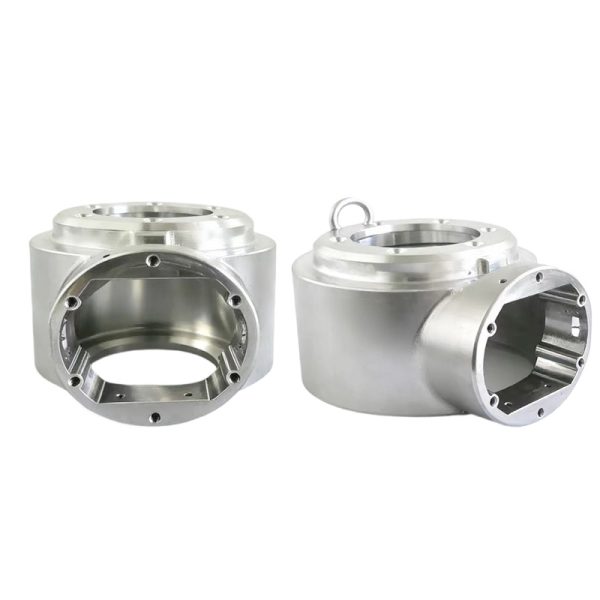
Advantages of sourcing CNC machined parts from China
A broad manufacturing ecosystem
In established manufacturing regions, a buyer may be able to coordinate machining, material purchasing, finishing and other operations within a supplier network. That can reduce the effort of managing separate vendors. The benefit is conditional: identify who performs each operation, who controls the drawings and who remains responsible for the finished part. An integrated quotation is useful only when its scope and accountability are clear.
Potentially competitive production costs
A supplier’s equipment utilization, process planning, stock availability and order volume may create a competitive quotation. Country of origin alone does not determine the cost. Compare identical material conditions, quantities, tolerances, finishing and inspection requirements. A low unit price that excludes a required treatment or report is not a like-for-like offer.
Options for prototypes and repeat orders
A qualified machine shop can be evaluated for both development parts and repeat production. Keeping the drawing history and acceptance criteria with the same supplier can simplify the transition. However, one acceptable prototype does not demonstrate batch consistency. Approve the first article and then validate the repeat-order process with an appropriately sized pilot lot.
Engineering discussion across manufacturing processes
A useful supplier can flag difficult geometry, tool access limitations or unnecessary tolerances before a purchase order is released. Treat proposed changes as engineering questions. Require written approval for every change affecting function, material or acceptance; a verbal suggestion should never silently replace the controlled drawing.
Disadvantages and practical solutions
| Risk | How it affects the buyer | Practical control |
|---|---|---|
| Supplier capability varies | Equipment photographs may not prove a difficult feature can be made | Review a representative part, measurement method and sample inspection report |
| Drawing interpretation and time zones | Questions and changes can slow approval or cause the wrong revision to be used | Use a controlled RFQ pack, written question log and named project contact |
| Material substitution or missing traceability | The part may look correct but not meet the specification | Require approved grades, certificates and lot identification before production |
| Freight and customs variability | A good ex-factory price can become an expensive delivered part | Compare landed cost and define shipping responsibilities and schedule buffers |
| Confidential design exposure | Drawings may reach parties beyond the intended manufacturing scope | Limit access, clarify subcontracting and obtain appropriate confidentiality arrangements |
| Rework across distance | A rejected shipment can interrupt an assembly line | Agree acceptance evidence, containment and replacement responsibilities in advance |
Qualify the factory and the process, not just the website
Ask for the supplier’s legal business identity, manufacturing address and a clear explanation of what is made in-house. A live factory walkthrough or visit can help check that the stated operations exist. Verify any certificate’s holder, site, scope and validity rather than accepting a logo or scanned document as sufficient evidence.
For the part itself, ask how the supplier will inspect the difficult features. A dimensional report is useful only when it identifies the drawing revision, datums, measurement method, actual results and acceptance limits. The U.S. International Trade Administration recommends due diligence when evaluating overseas business partners.
Control quality before the first shipment
- Freeze the specification: provide the CAD file and controlled drawing, units, grade, finish and inspection requirements as one RFQ package.
- Agree first-article evidence: identify the dimensions, appearance criteria and material documents required before approving further production.
- Test the actual assembly: a dimensionally acceptable part may still expose a tolerance-stack or interface problem. Validate the mating components where practical.
- Approve a pilot lot: inspect representative production parts and confirm repeatability before increasing volume.
- Define shipment release: agree the required records, packaging protection and process for handling a nonconformance.
Compare total landed cost instead of unit price
Build a quotation comparison that includes parts, tooling or setup, finishing, inspection, packaging, freight, insurance, applicable import charges and the internal cost of qualification. Account for the operational consequences of delay or rejection separately. Avoid universal savings percentages; calculate the result for your own purchase.
State the named place and agreed Incoterms® version. EXW, FCA, DAP and DDP allocate different responsibilities. DDP is not automatically practical if the seller cannot complete import formalities. The ICC explanation of EXW and DDP is useful background. Confirm current classification and import requirements with a qualified customs professional; rates depend on the product, destination and current rules.
Protect drawings and maintain revision control
Share only the design information needed for the manufacturing review. Identify approved subcontractors and clarify who owns fixtures, programs and supplied design files. Use a written revision log so a purchase order, CAD model and inspection report all refer to the same release.
Intellectual property protection is jurisdiction-specific. The International Trade Administration’s China IP guidance explains why overseas protection requires advance planning. Obtain appropriate professional advice for sensitive designs; a confidentiality agreement alone is not a complete protection strategy.
When Chinese CNC sourcing is a good fit—and when it may not be
Consider it when the specification is stable, the supplier can demonstrate the required process, qualification is feasible and the delivered cost remains attractive. A local supplier may be more suitable for emergency replacements, frequent on-site development work or designs whose qualification and transport costs outweigh the potential benefit. Some buyers use both: local support for urgent iteration and a qualified overseas source for stable repeat parts.
China CNC machining supplier checklist
- Verified business identity, manufacturing location and subcontracting scope.
- Representative process review and first-article acceptance plan.
- Approved material grade, condition and traceability requirements.
- Defined inspection method, critical features and reporting scope.
- Named project contact and documented engineering change approval.
- Comparable landed cost, shipping terms and delivery milestones.
- Confidentiality controls, packaging and nonconformance responsibilities.
Resolve material questions before requesting quotations with our CNC machining materials selection guide.
Review a project with LXCET: our manufacturing facility occupies an entire 3,000 m² building in Dongguan, China. You can learn about our factory and send drawings for a project-specific machining discussion. Confirm the material, process, inspection scope and delivery requirements for your part before placing an order.