

Blog

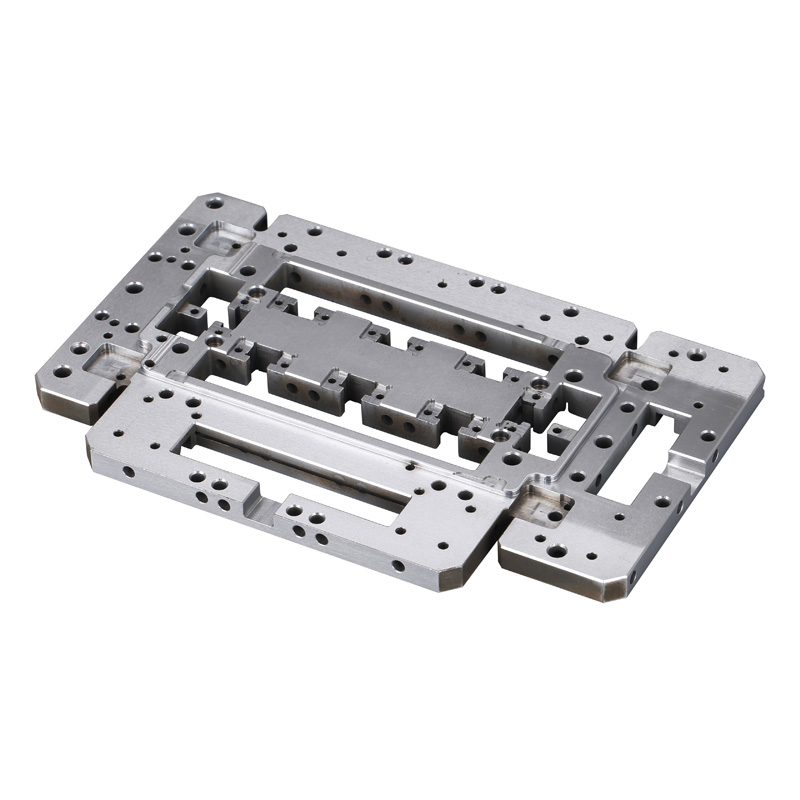
The buyer approves a quotation for revision B. Engineering then sends a revision C model with a changed bore, while the purchase order still references B. The supplier may manufacture a dimensionally correct part to the wrong configuration. Machined part revision control connects the approved design to the quote, work in progress and inspection evidence.
Define the package, not just the file name
A release package can include a 3D model, a drawing, material and finish specifications, inspection requirements and approved exceptions. State which documents define each requirement and how conflicts are resolved. Do not assume every supplier treats a PDF, a STEP file and an email note in the same order of precedence.
ASME’s current Y14.35 scope addresses identification and recording of revisions to engineering drawings and associated documents. That public description establishes the subject of the standard; the workflow below is a practical purchasing recommendation, not a claim that it reproduces every standard requirement. Apply the edition and document-control rules required by your contract.
Where machined part revision control breaks down
Common handoff failures are mundane: a file is renamed without updating its contents, a quotation carries an old revision, or an inspection report lists only the part number. A changed coating note can also matter even when the shape in the model looks identical. Check the released documents themselves rather than relying solely on the folder name.
Supplier-proposed DFM changes deserve the same control. Protolabs describes a re-quote step when a customer modifies its source model to match a proposed revision, so the quotation and part remain aligned. This is an example of that manufacturer’s workflow, not an LXCET platform feature. The purchasing lesson is to settle the accepted geometry and commercial scope together.
Send an actionable change notice
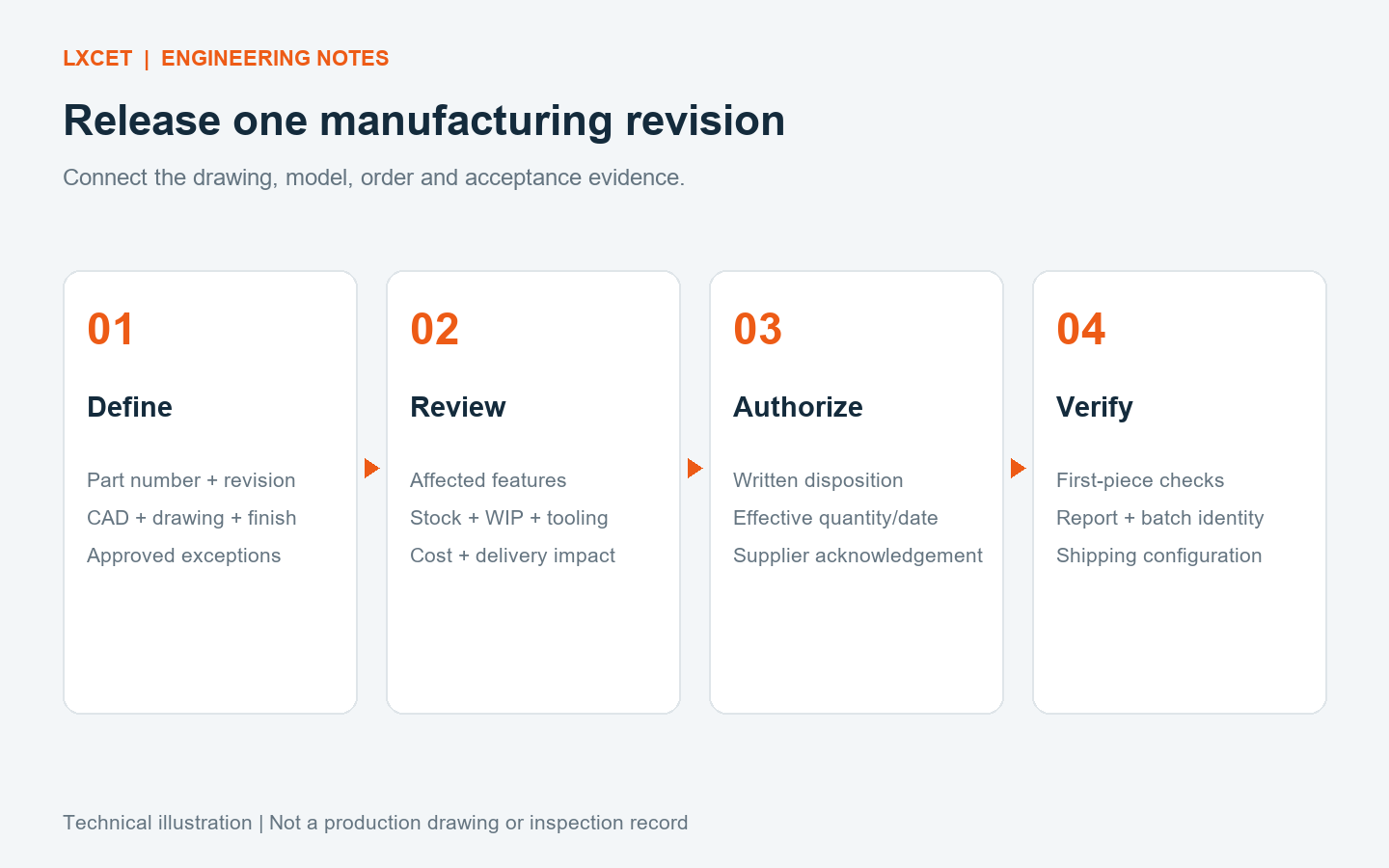
Identify the old and new revisions, affected features, reason for change, and required effective quantity or date. Attach a marked comparison for review, but also supply the complete released files. A redlined screenshot should not become the only production definition.
Illustrative example: revision C changes a locating bore from Ø8 mm to Ø10 mm. Ask whether revision B blanks can be reworked, whether the larger bore affects wall thickness or the mating component, and which inspection results must be repeated. The example gives no automatic permission to rework: engineering must approve the resulting configuration and acceptance method.
| Order stage | Buyer asks for | Decision to record |
|---|---|---|
| Quote only; work not released | Updated scope, price, delivery and exceptions | Which quotation and revision the PO accepts |
| Material already purchased | Compatibility with the new requirements and committed cost | Use, return, retain or replace material |
| Parts in machining or secondary processing | Quantity and operation reached; feasible rework route | Stop, continue or rework specific quantities |
| Samples already approved | Changed-feature inspection and affected functional checks | Whether earlier approval still applies, and to what extent |
| Finished stock ready to ship | Separated quantities, revision identity and conformance evidence | Accept, hold or reject each configuration explicitly |
Compare the cost of implementing the change
Separate recurring unit-price changes from one-time programming, fixture, tooling, inspection or rework charges. Ask what happens to committed material and partially completed parts. Record whether the revised delivery starts from change approval, material availability or another agreed event.
A useful comparison sheet has five columns: cost item, original scope, revised scope, quantity affected and written approval. Populate it with supplier quotations rather than assumed percentages. A nominally unchanged unit price can still leave a substantial one-time charge unresolved.
Acceptance evidence must carry the released revision
Ask the supplier to acknowledge the manufacturing package before restarting affected work. Identify the revision on the inspection report and link it to the supplied batch or other agreed traceability identifier. Define how mixed revisions will be separated and labeled if both are authorized for delivery.
Repeat the checks affected by the change and assess whether another feature’s function has been disturbed. A changed bore may affect a locating fit; a finish revision may affect a mating surface. Engineering decides the necessary review, while purchasing records the agreed evidence and release condition.
PO change checklist
- Part number, old revision and newly released revision are unambiguous.
- Model, drawing, finish and inspection files agree or have an approved conflict resolution.
- Supplier confirms affected stock and work-in-progress quantities.
- Engineering approves rework, substitutions or acceptance deviations separately.
- One-time charges, unit prices and delivery impacts are recorded.
- The effective order quantity or date is stated.
- Superseded production files are withdrawn from the active package.
- Revised sample approval, reports and shipment identification are agreed.
Put the revision in the enquiry
Review the CNC machining RFQ checklist and inspection report checklist. Send the released files, quantity and change summary to tonyzhou@lxcet.com, or use the drawing enquiry form. Ask for confirmation of the revision and scope before releasing manufacture.